
Itinerary
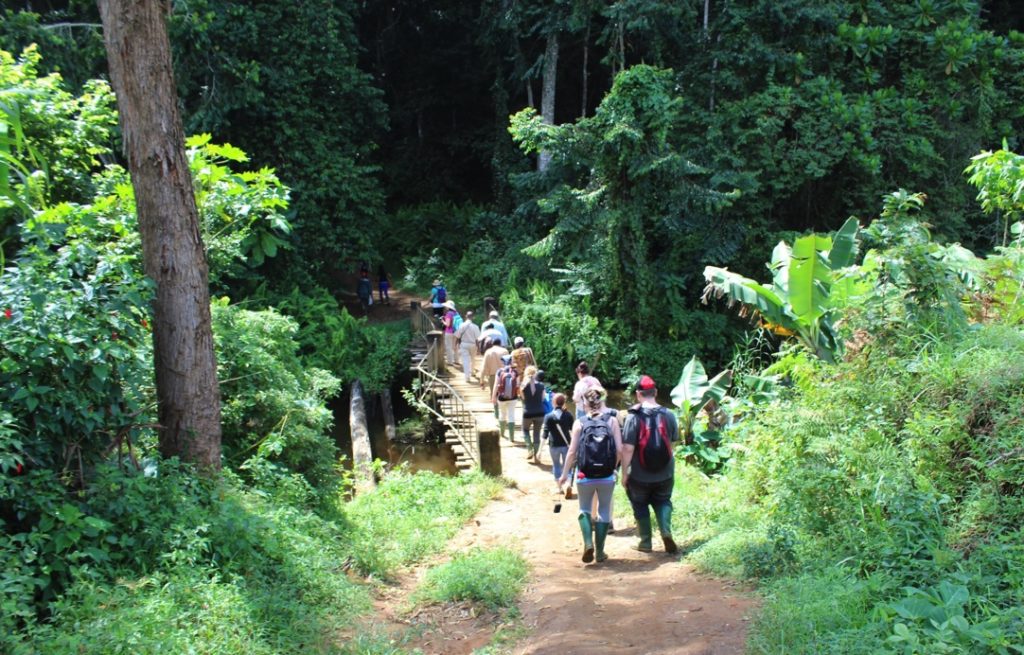
DAY 1: ARRIVAL in JRO (Kilimanjaro International Airport)
Eastern Arc Birding will pick you from Kilimanjaro International Airport (also known as KIA or JRO). The birding safari will start with a restful overnight in Tanzania’s tourism capital, Arusha.
DAY 2: TARANGIRE NATIONAL PARK.
We will travel to Tarangire National Park (2-hour drive from Arusha town) which is a less explored birding site, but home of some unusual species, such as the endemic Ashy Starling, Tanzanian Red-billed Hornbill and savannah lovebirds and parrots. Entering Tarangire will introduce you to the home of diverse wildlife, such as African elephants, buffalo, giraffe, zebra, lions, cheetahs, leopards, and Ostriches. The park is decorated by massive baobab trees, where in many cases the trunks have been chiseled away by thirsty elephants during droughts. The Acacia woodland and baobab trees host numerous bird species, and among these will includes loads of raptors and waterbirds. Overnight in Tarangire.
DAY 3: TARANGIRE NATIONAL PARK
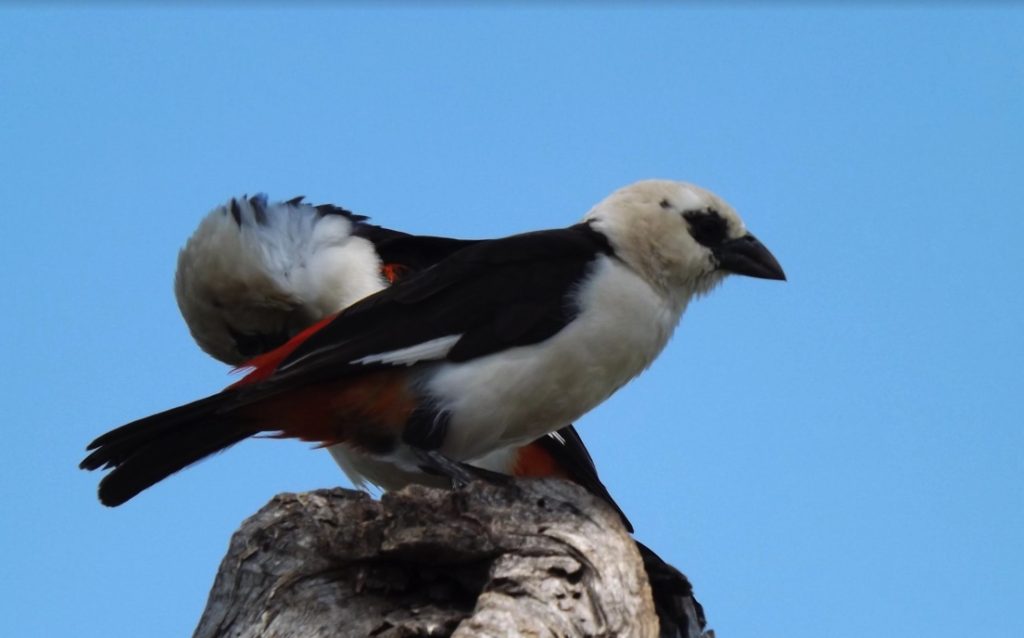
After early breakfast, we will enjoy birdwatching by focusing on thick bushes, old dead standing trees for raptors, and along the river’s banks and water bodies. After the morning birding we will head off to Arusha town and overnight.
DAY 4: ENGIKARET LARK PLAINS
After early breakfast we will drive north to the Engikaret Lark Plains for a morning of intriguing birding. Birds will be very active on the way and we shall make stops to enjoy many species as we drive along, including potentials such as Buff-breasted Bustard. We shall enjoy birding at the plains and target Beesley’s Lark there, one of the rarest birds on the planet. After spending the whole day in the African bushy savannah, including learning about with Maasai culture, we will then return slowly at around 1600 hrs to Arusha (overnight).
DAY 5: TRAVEL TO PARE MOUNTAINS REGION
We shall leave early from Arusha and head to the town of Same for an overnight. This fast-developing town is the perfect stop for birding numerous spots from, including waterbirds, dryland birds and the first Eastern Arc hotspot.
DAY 6: TRAVEL TO NYUMBA YA MUNGU DAM:
Nyumba ya Mungu means Home of God in Swahili. This is a very large and scenic dam which is the main source of local hydro-electric power managed by Pangani/Ruvu Basin Authority. The dam is fed by the Kikuletwa and Ruvu Rivers, which after the dam, become the big Pangani River that meanders towards the coast. Here you will have an amazing view of the dry lands, scattered with a woodland that host many beautiful birds.
We will leave early in the morning and about 40 km north of Same, we will make a little detour to some very nice habitat just before the Nyumba ya Mungu Dam. Species to be expected here include Rufous and Scaly Chatterer, Pringle´s Puffback, Southern Grosbeak Canary, Pygmy Batis, and many more dryland specialties.
We shall enjoy the views of the dam which is full of waterbirds, including African Skimmer, Black Heron and Lesser Flamingo. After a full day birding, we shall drive back to Same town for a restful overnight.
DAY 7: TRAVEL TO SOUTH PARE—WEST USAMBARA MOUNTAINS
After an early breakfast, we will depart for the South Pare Mts, which is the first Eastern Arc Mountain we will ascend. We will see plenty more birds in the South Pares, including the endemic South Pare White-eye. After some birding in lush forest, we will head towards the adjacent West Usambara Mts, and spend an overnight at the well-known Muller’s Lodge.
DAY 8: WEST USAMBARAS—MAGAMBA NATURE RESERVE
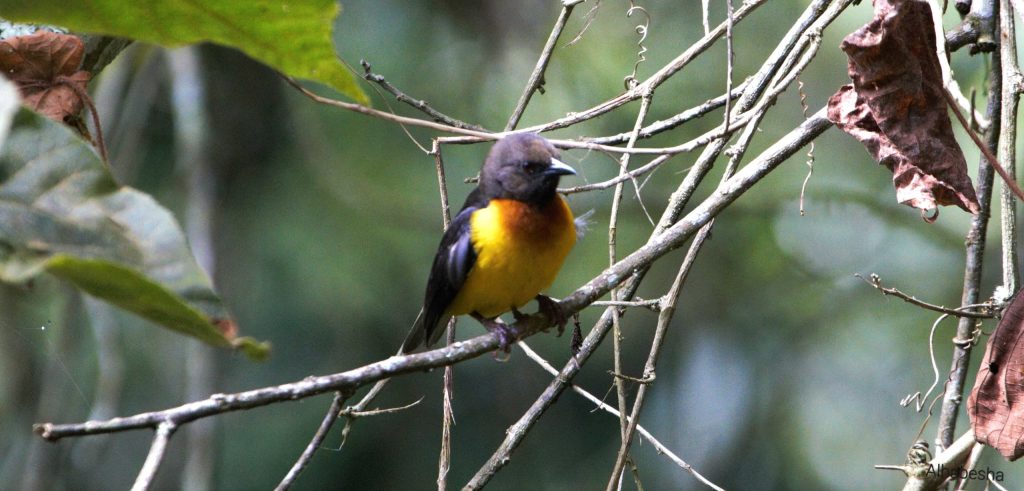
After we wake up to the spectacular morning bird choir, we will birdwatch in the lush Magamba forest. Here we will look for the Spot-throat, Usambara Akalat, Usambara Double-collared Sunbird and the Usambara Weaver, which are most often encountered in this forest than elsewhere in the West Usambaras.
DAY 9: WEST USAMBARA-MAGAMBA NATURE RESERVE
After early breakfast we will continue to search for species missed from the previous day. We will explore the forest well to find these enigmatic birds, and at dusk, we will look for the Usambara Nightjar. Apart from enjoying the birds, we will also have a chance to see an indigenous tree nursery where seeds and seedlings are tended to before transplanting to the degraded areas to reduce effects of deforestation and to provide ecological linkages of forest patches in Magamba Nature Reserve.
DAY 10: WEST USAMBARAS—EAST USAMBARAS (AMANI NATURE RESERVE)
We will pack early in the morning and drive down to the bottom of the mountain, continue east towards the coast through the Lwengeru Valley and then climb another mountain. As soon as we reach the forest, we will look for many surprises it will yield, so stay tuned. After a late morning birding in the lowlands of the East Usambaras, we will start heading towards the legendary Amani Nature Reserve. We will lodge at the forest headquarters and bird the area around the headquarters from the afternoon to evening. If we are lucky, we will find the elusive Usambara Eagle-Owl at night.
DAY 11: AMANI NATURE RESERVE (EAST USAMBARA MTS)
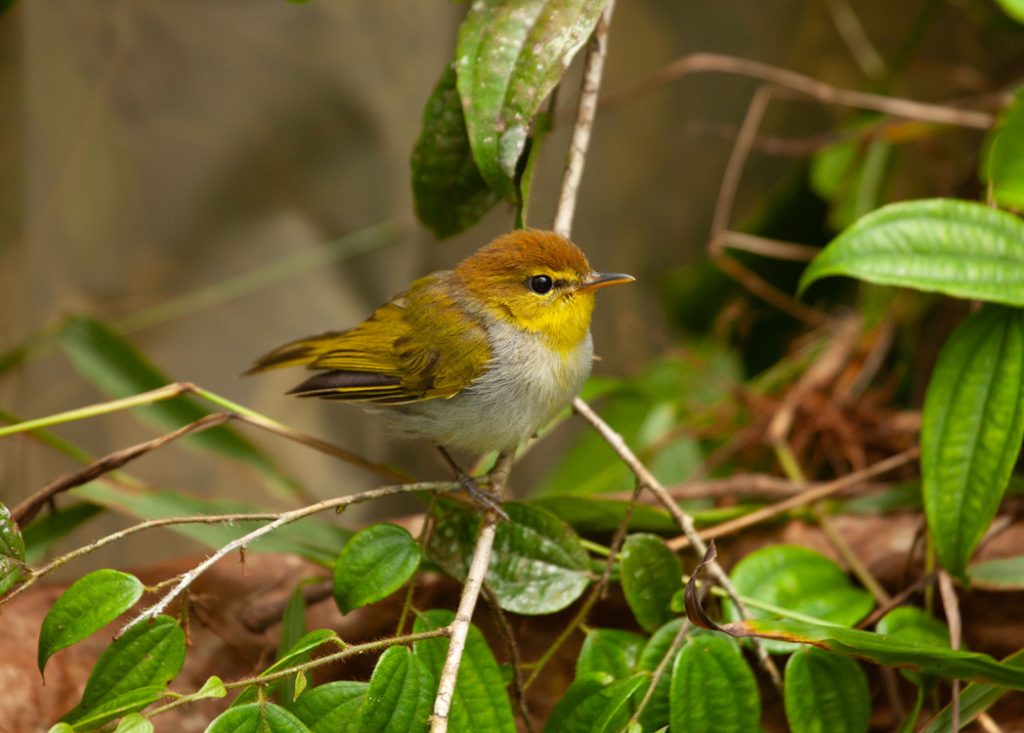
Before breakfast, from 0600 to 0930 hrs, we will be birding around the Amani Botanical Garden (the oldest Botanical Garden in Africa introduced by German colonials over 100 years ago). In the open habitat of the garden we will see most of the endemics and rare sunbirds in the area including Amani Sunbird, Banded Green Sunbird and Uluguru Violet-backed Sunbird. In the afternoon, will bird in the primary forest focusing on some of enigmatic forest dependent species, such as Sharpe’s Akalat, Usambara Thrush, Pale-breasted Illadopsis, White chested Alethe and many more. If we are extremely lucky, we may chance on Dapple-throat and numerous number of gorgeous view points. \
DAY 12: AMANI NATURE RESERVE (EAST USAMBARA MTS)
After another early breakfast at 0600 hrs, we will drive back down for about 45 mins to the foothills of East Usambara Mts. We will spend some time searching for lowland species such as Usambara Hyliota, Lowland Tiny Greenbul, Little Yellow Flycatcher, Fisher’s greenbul and many more skulkers. Later well go back up and keep searching the primary forest for other birds we have missed, like the Critically Endangered Long-billed Forest Warbler or the elusive Kretchmer’s Longbill. While in Amani for two full days, you will have the opportunities to experience local culture, dissected forested and agricultural landscapes, a myriad of waterfalls, and a numerous of gorgeous viewpoints.
DAY 13: AMANI NATURE RESERVE (EAST USAMBARA MTS) TO PEMBA ISLAND
After an early breakfast we will slowly drive down from Amani Nature Reserve to the foothills again (Sigi-Kisiwani area), and scan these areas for few birds we may have previously missed. we will then drive to Tanga town and take a flight to the small island of Pemba, where we will stay for one night. We will focus on the four island endemics: Pemba Scops Owl, Pemba Green Pigeon, Pemba White-eye, and Pemba Sunbird, but we will also visit various habitats for other species like the highly-sought Crab-plover, Dickinson’s Kestrel, Mangrove Kingfisher, Saunders’s Tern, and Sooty Gull. Night on Pemba Island.
DAY 14 : PEMBA, TANGA MIKUMI.
In the morning after breakfast, after searching for any bird targets we missed, we will fly back to Tanga and travel straight away to Mikumi for overnight. We will make a brief stopover for a hot lunch and fresh fruits in the bustling town of Morogoro and then head to Mikumi National Park, staying overnight at nearby Tan-Swiss Lodge.
DAY 15: MIKUMI NATIONAL PARK
After a hearty breakfast, the morning will be spent birding in miombo woodland, just 10 km north of Mikumi town. The main target species is Hoffmann´s Sunbird, which was recently spilt from Shelley’s Sunbird. Other good species in this woodland will also be found, either in the morning or late afternoon, along with some supreme bird guiding and a chance to see many of the big mammals in the national park itself.
DAY 16: IFAKARA—UDZUNGWA MOUNTAINS
After early breakfast at Twiga Hotel (twiga means giraffe in swahili), we look around for some few species of birds in the morning, and then drive to Ifakara (1.5 hrs) into the Kilombero Valley. We will stop by a special bridge where we will look for the Kilombero Cisticola, Kilombero Weaver and White-tailed Cisticola. Here we will also target some of the waterbirds and kingfishers, and as we head back towards the hotel, we will make a short circuit to around the Kilombero Sugar Plantations for the same target species, as well as Coppery-tailed Coucal and Anchieta Tchagra.
DAY 17 UDZUNGWA-ULUGURU MTS
After early breakfast The Eastern Arc Birding will fly its wings towards Morogoro and take a right towards Bunduki Camp in the Uluguru Mts (bad roads). Depending on when we get there, we can try to look for some unique forest birds, but it could be better to wait for the morning after overnighting at the camp.
DAY 18 ULUGURU-BUNDUKI
We will walk up through farms (shamba) until we reach the forest (about 2 hours) and after another hour in the forest, we will reach the spot where we will serch for the main targets: Winifred´s Warbler, Olive-flanked Ground Robin, Uluguru Greenbul, Bar-throated Apalis (Uluguru race) and maybe Purple-throated Bush shrike and Brown Woodland Warbler. If successful, we will break camp and go back to Morogoro for the next big search. If not, we can spend another night here.
DAY 19 ULUGURU MTS (BUNDUKI -TEGETERO)
We will drive up to Tegetero, still in the Uluguru Mts (bad roads), get porters and walk up to camp (1 ½ hrs). On arrival we will set up a camp and enjoy afternoon birding around the campsite.
DAY 20 ULUGURU MTS-TEGETERO
We will experience a full day birding in Tegetero around and beyond the camp. The main target species is the enigmatic and elusive Uluguru Bush-shrike, and many other endemics in the area. What we miss in Bunduki we will find here, and vice versa, with the exception of the bush-shrike.
DAY 21 ULUGURU MTS (TEGETERO-GAIRO)
After a good morning birding at Tegetero, we will walk down slowly and then drive down the mountain slopes to Morogoro, and from there to Gairo, near the Ukaguru Mts (about 124Km)
DAY 22 GAIRO to UKAGURU MTS
After early breakfast will leave Gairo town early and drive up to Ukaguru Mts (about 2 hours). At the top of the mountain, when we reach good forest, the main target species we will search for include: Rubeho Akalat and the Rubeho Warbler. These are the special birds of this location. We will overnight in Gairo and then head to Mpwapwa, which is the start of the ascent up to Rubeho Mts. We first organise porters and pay all fees to visit the forest. After driving up a very short distance, we will hike about 5-6 hours up the mountain. Two-nights of camping is planned to ensure we manage as many of the unique birds as possible.
DAY 23 (RUBEHO MTS)
Apart from what we see the previous day as we hike up and set camp, the morning of Day 23 will be a full day of birding on the forested slopes of the Rubeho Mountains. We will search for the recently discovered Rubeho Forest Partridge (only photographed for the first time in the field a few years ago), Rubeho Akalat, Skye Double-collared Sunbird, and a new sunbird discovered here by Ross Gallardy in 2021. Many other more widespread species occur here, like Bar-tailed Trogon, Green Tinkerbird, White-tailed Crested Flycatcher, Red-capped and Evergreen Forest Warblers, Black-lored Cisticola, African Hill Babbler, Olive-flanked and Cape Robin-Chats, White-starred Robin, White-chested Alethe, Bertram’s Weaver, and many more..
DAY 24 (RUBEHO MTS-DODOMA)
After a final morning birding in these mountains, we will slowly walk downslope and then drive to Dodoma (the fast-growing capital city of Tanzania) for an overnight stay.
DAY 25 (DODOMA-BABATI)
After a quick breakfast, we will drive early in the morning to Babati, a small town at the base of the Mbulu Mountains. From there we will drive up to Mbulu into the Nou forest to look for the Mbulu White-eye and Mbulu Robin-chat (some have separated this from the Olive-flanked Robin-chat). After birding there, we will drive to Arusha for the final overnight.
DAY 26 (ARUSHA TO JRO (Kilimanjaro International Airport) This day sadly marks the end of the Eastern Arc Birding tour and, after so many birds you may have seen for the very first time, we hope you fly back home safely and retain many good memories. And you know, you are always welcome back.
The Eastern Arc Birding uses the high-quality safari vehicles specially modified and extended 4×4 vehicles, Toyota Land cruisers with large opening roof hatches are nicknamed “Boeing 787” in Tanzania. This kind of vehicle makes the safari experience so much comfortable and more enjoyable.